9 Different Types of Credit Cards in Australia: Explained
9 Different Types of Credit Cards in Australia: Explained
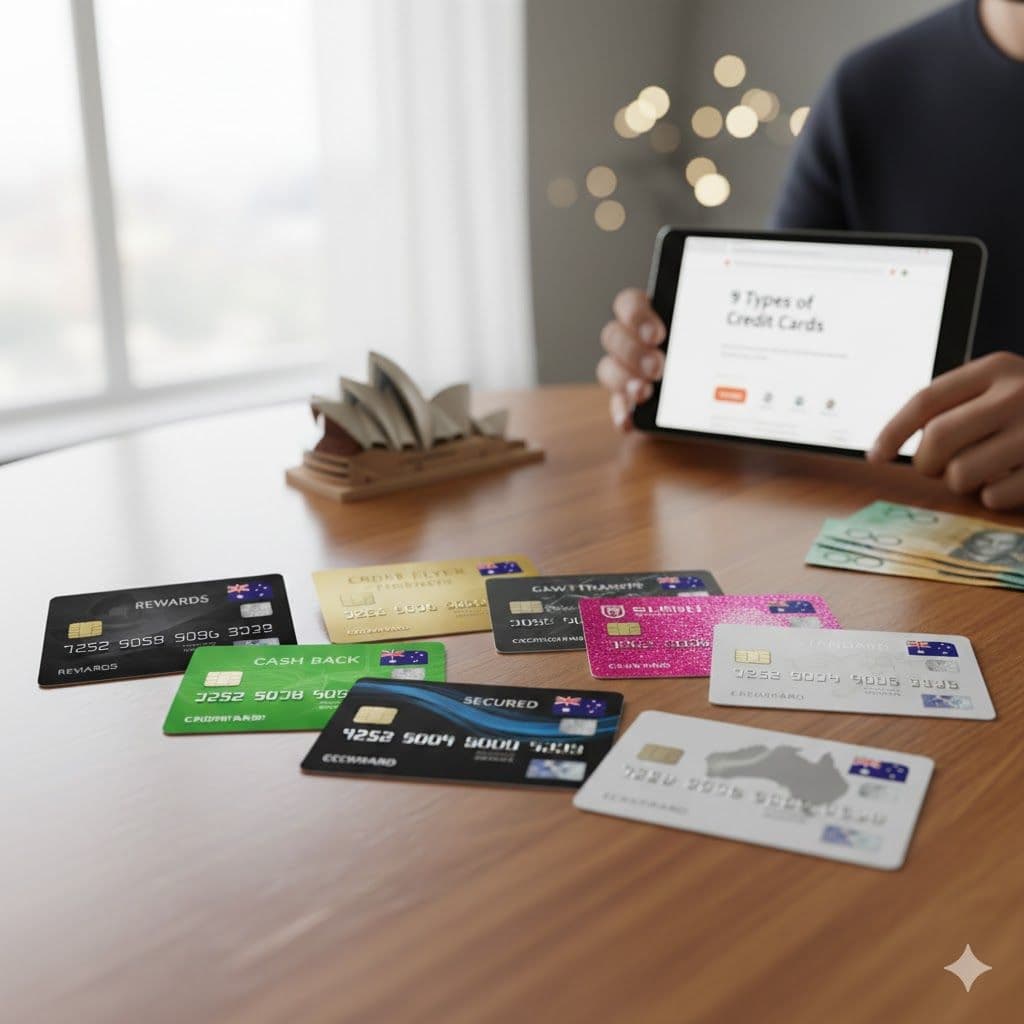
Choosing a credit card can feel overwhelming — Australia offers many card types, each designed for different spending habits, lifestyles, and financial goals. In this guide, we break down the nine common types of credit cards in Australia, how they generally work, their typical features, and factors you may want to consider when comparing options.
You’ll also learn how some people compare other forms of credit, such as personal loans with fixed repayment schedules, when deciding whether a credit card suits their needs.
What are the different types of credit cards?
The term types of credit cards refers to categories based on features, benefits, fees, and intended use. Some cards can overlap categories (for example, a rewards card may also be a frequent flyer card).
Understanding the differences can help you:
- compare fees and features more confidently
- choose benefits you’re more likely to use
- identify card features that are relevant to how you plan to use the card
- select a product that aligns with your spending habits and budget
1. Low-rate credit cards
Low-rate credit cards focus on providing a lower ongoing interest rate compared with many other credit card products. They are sometimes considered by people who may carry a balance from time to time.
Typical features
- Interest rates that may be lower than many standard cards (rates vary by provider)
- Fewer additional features or benefits
- Moderate or relatively low annual fees
- Limited or no rewards programs
Often considered by
People who do not always repay the full balance each month.
Key consideration
A lower interest rate may reduce interest costs if a balance is carried, although the total cost will still depend on repayments, fees, and the specific terms of the card.
Learn more about how interest is commonly charged:
How does credit card interest work: https://www.credit24.com.au/blog/how-does-credit-card-interest-work
2. No-fee or low annual fee credit cards
These cards are designed to keep ongoing costs relatively simple.
Types may include
- No ongoing annual fee cards
- Cards with the first year’s annual fee waived
- Cards with relatively low annual fees
These products may offer fewer features or benefits compared with premium cards.
Often considered by
People who want a basic credit card and prefer to avoid paying for features they may not use.
Note
Promotional “first-year free” offers may revert to a standard annual fee later, so reviewing ongoing costs can be helpful when comparing cards.
3. Rewards credit cards
Rewards credit cards allow cardholders to earn points, cashback, or other benefits for eligible spending.
Examples of reward types
- Points-based rewards programs
- Cashback offers
- Retail or gift card rewards
Typical characteristics
- Reward points earned per eligible dollar spent (rates vary by card)
- Annual fees that may be higher than basic cards
- Interest rates that may also be higher depending on the product
Often considered by
People who expect to use rewards features regularly and who generally repay their balance in full each month.
Interest charges and fees may reduce the overall value of rewards if a balance is carried.
Read more:
How to choose a credit card: https://www.credit24.com.au/blog/how-to-choose-a-credit-card
4. Frequent flyer credit cards
Frequent flyer credit cards are a specialised type of rewards card designed to earn airline loyalty points.
Major airline programs in Australia include
- Qantas Frequent Flyer
- Velocity Frequent Flyer
Possible features
- Points earned through eligible spending
- Travel-related benefits depending on the card
- Travel insurance or lounge access on some products (conditions and exclusions usually apply)
These cards often have higher annual fees, so their value may depend on how often the cardholder travels and uses the associated benefits.
5. Balance transfer credit cards
Balance transfer cards allow you to move existing credit card debt from one provider to another, usually with a promotional interest rate for a set period.
Common features
- Promotional interest rates for balance transfers
- Promotional periods (for example several months to a few years depending on the product)
- Balance transfer fees, often calculated as a percentage of the transferred amount
- A standard interest rate that applies after the promotional period ends
Important considerations
- Interest rules for new purchases may differ from transferred balances
- Payment allocation rules vary between providers
- Missing repayments may affect promotional conditions
Read more:
Credit card refinance guide: https://www.credit24.com.au/blog/credit-card-refinance
6. Travel credit cards
Travel credit cards are designed with features that may be useful when travelling internationally.
Typical features may include
- Foreign transaction fee structures that vary by provider
- Travel insurance on some cards (subject to conditions and eligibility)
- Airport lounge access or travel-related benefits on certain products
- Travel-related rewards programs
Often considered by
People who travel frequently and want features designed for overseas purchases or travel-related benefits.
7. Business credit cards
Business credit cards are intended for business use and may require an Australian Business Number (ABN).
Possible features
- Separation of business and personal expenses
- Additional cards for employees
- Credit limits subject to business assessment
- Expense tracking tools or accounting integrations depending on the provider
Often considered by
Sole traders, small businesses, and companies looking to manage operational expenses.
8. Student credit cards
Student credit cards are entry-level products sometimes offered to people studying at university or TAFE.
Typical features may include
- Lower credit limits
- Low or no annual fees
- Simpler product structures without complex rewards programs
- Eligibility criteria that consider limited credit history
Often considered by
People who are beginning to build a credit history and want to learn how to manage repayments.
9. Premium credit cards
Premium credit cards typically include products such as Platinum, Signature, or Black cards.
Possible features
- Higher rewards earn rates
- Airport lounge membership or travel-related perks
- Concierge services
- Travel insurance benefits (conditions and exclusions usually apply)
These cards often have higher annual fees and may require higher income or stronger credit eligibility.
Often considered by
People who expect to use premium benefits regularly and are comfortable managing higher-tier credit products.
What type of credit card should I get?
Choosing a credit card often depends on your spending habits, financial goals, and how you plan to use the card.
If you typically repay the full balance each month
You may want to compare:
- Rewards or frequent flyer programs
- Bonus points offers (checking eligibility conditions)
- Interest-free periods if offered and conditions are met
- Annual fees and benefits
If you may carry a balance
Some people compare:
- Lower-rate credit cards
- Balance transfer offers for existing credit card debt
Fees, interest rates, and repayment terms can vary significantly between products.
If you travel often
You may want to compare:
- Frequent flyer credit cards
- Travel-focused credit cards
- Foreign transaction fees
- Lounge access and travel benefits
If you're building or rebuilding credit
Some people start with:
- Low-fee or entry-level credit cards
- Cards with relatively modest credit limits
Keeping limits manageable and making repayments on time can help people develop positive credit management habits.
Read more:
How do credit cards work: https://www.credit24.com.au/blog/how-do-credit-cards-work/
Credit card limit guide: https://www.credit24.com.au/blog/credit-card-limit
Benefits of choosing the right credit card type
- Helps narrow down options when comparing products
- Makes it easier to match features to spending habits
- Supports budgeting and financial planning
- May help avoid paying for features you do not plan to use
- Encourages clearer understanding of fees and card conditions
Drawbacks to consider
- Some credit cards have higher annual fees
- Rewards programs may encourage additional spending for some people
- Premium cards may require higher income or stronger credit eligibility
- Balance transfer offers may revert to standard rates after the promotional period
- Some cards include foreign currency fees or additional charges
FAQs about credit card types
What type of credit card should I get for my first card?
Many beginners compare low-fee or basic credit cards with relatively modest limits. These products can help people learn how credit cards work while managing repayments responsibly.
How can I tell what type of credit card I have by the first four digits?
The first digits of a card number (called the Bank Identification Number or BIN) usually identify the card network. For example:
- 4xxx often indicates Visa
- 5xxx often indicates Mastercard
- 3xxx often indicates American Express
Your provider’s mobile app or account statement typically shows the exact product type.
Can I change my credit card type with the same bank?
Many providers allow customers to switch between card products. A credit assessment and eligibility criteria may apply.
What’s the difference between a debit card and a credit card?
A debit card uses money available in your bank account.
A credit card allows you to borrow up to a set limit, and interest may apply depending on the card’s terms and how the balance is repaid.
Are premium credit cards worth the annual fee?
It depends on how often the benefits are used. Some people find value in travel-related perks or rewards programs, while others prefer simpler cards with lower fees.
How do I choose between a rewards card and a low-rate card?
If you generally repay your balance in full each month, you may compare rewards features. If you expect to carry a balance at times, a lower-rate card may help reduce interest costs depending on the product.
Can I have multiple credit cards?
Some people hold more than one credit card for different purposes. Managing multiple cards may require careful tracking of repayment dates, limits, and fees.
What credit score do I need for different card types?
Requirements vary between providers. Entry-level cards may have lower eligibility thresholds than premium or rewards cards.
How does a balance transfer credit card work?
A balance transfer allows you to move existing credit card debt to another card with a promotional interest rate for a limited time. After the promotional period ends, the rate usually returns to the standard interest rate.
What’s the difference between Visa, Mastercard, and American Express?
Visa and Mastercard are payment networks used by many banks and card providers. American Express operates its own network and card products. Acceptance and fees may vary between merchants.
Comparing credit cards with other credit options
When comparing credit options, some people also look at other forms of borrowing such as personal loans.
Credit cards provide a revolving credit limit that can be reused after repayments. In contrast, personal loans usually involve a fixed loan amount and scheduled repayments over a defined period.
The appropriate option can depend on individual financial circumstances, repayment preferences, and the terms of the product.
Learn more:
Personal loan vs credit card: https://credit24.com.au/blog/personal-loan-vs-credit-card/
Personal loan to pay off credit card: https://www.credit24.com.au/blog/personal-loan-to-pay-off-credit-card
Credit card consolidation loan: https://www.credit24.com.au/credit-card-consolidation-loan
How to transfer money from credit card to bank account: https://www.credit24.com.au/blog/how-to-transfer-money-from-credit-card-to-bank-account
Conclusion
Understanding the different types of credit cards in Australia can help you compare products based on features, fees, and how you expect to use the card.
Whether you prioritise lower fees, travel-related benefits, rewards programs, or managing existing debt, reviewing product details carefully can help you decide which option may suit your circumstances.
When comparing credit cards, some people also consider other credit products such as personal loans, depending on their repayment preferences and financial goals. Reviewing the costs, terms, and eligibility requirements of any credit product can help support informed decisions.
Disclaimer
IPF Digital Australia Pty Ltd, trading as Credit24, ABN 59 130 894 405. Australian Credit Licence 422839.
The information in this article is general in nature and does not consider your objectives, financial situation, or needs. Lending criteria, fees, and charges apply. For product details, eligibility requirements, and full terms and conditions, visit www.credit24.com.au.
Start a loan application