Pay Yourself First: 8 Steps to Reverse Budgeting in Australia
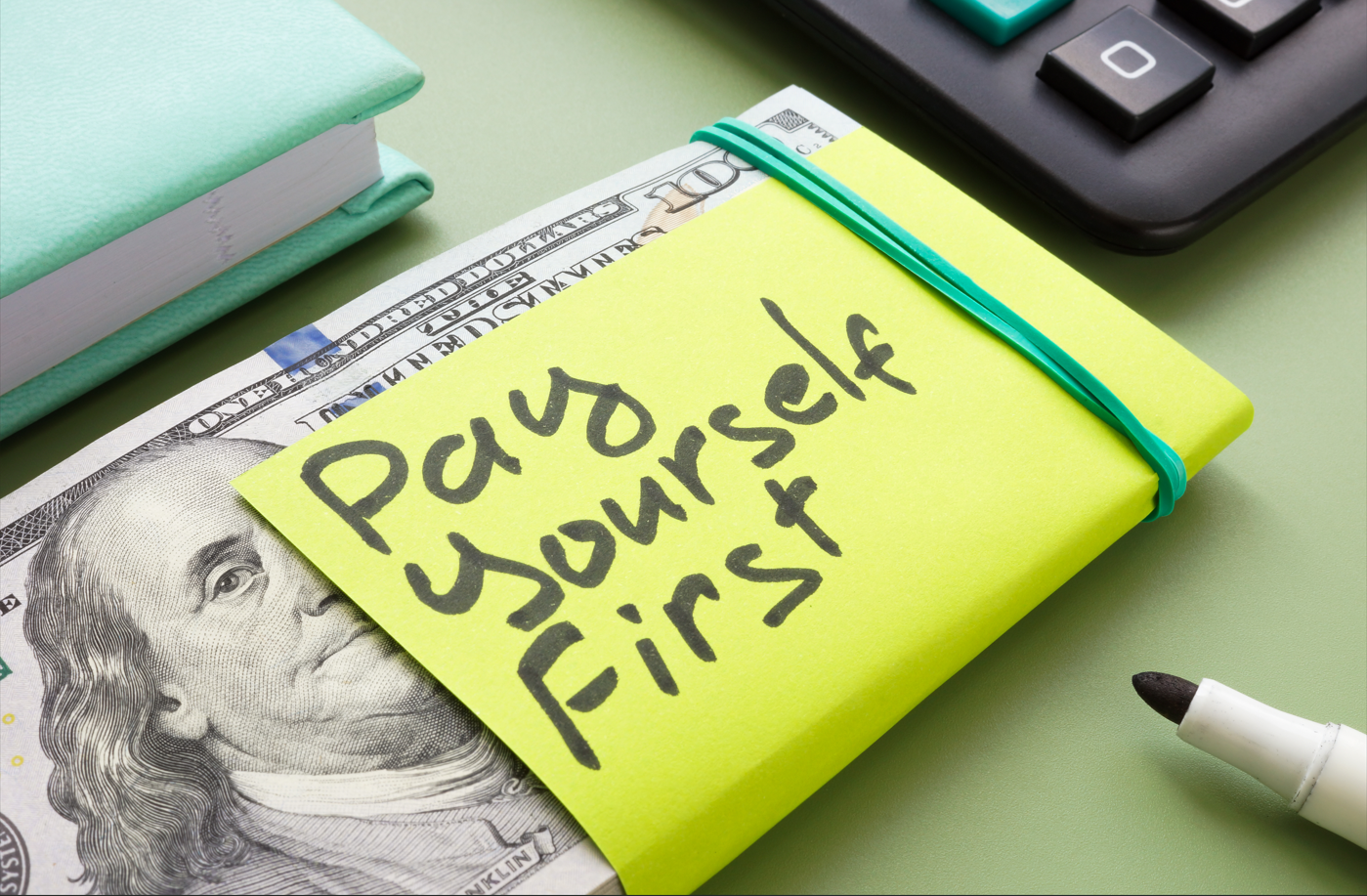
Pay Yourself First: 8 Steps to Reverse Budgeting in Australia
Traditional budgeting doesn’t work for everyone. Many Australians start each month with good intentions, only to find there’s little left to save once bills, groceries and everyday spending are covered. Rising living costs have made this more challenging for many households, with savings often becoming harder to maintain.
That’s where the “pay yourself first” approach can help.
Instead of saving whatever is left over, this reverse budgeting method prioritises savings before spending. It’s a practical approach that may help you build more consistent saving habits and improve financial confidence over time — without needing to track every single dollar.
This guide explains what pay yourself first means, why some people use it, and how to implement it step by step in Australia. It also outlines considerations to keep in mind if unexpected expenses affect your budget.
What does pay yourself first mean?
Pay yourself first is a budgeting method where you set aside money into savings or investments as soon as you receive income — before paying bills or spending on non-essentials.
It’s often called reverse budgeting because it flips the traditional approach.
Traditional budgetingIncome → Expenses → Save what’s left
Pay yourself firstIncome → Savings → Expenses → Discretionary spending
Instead of relying on willpower at the end of the month, this method prioritises saving from the beginning.
If you’re new to budgeting, it can help to read:
https://www.credit24.com.au/blog/what-is-a-budget
Why it works psychologically
Behavioural finance research suggests many people tend to spend what is readily available in their accounts. When saving happens automatically, some people find it easier to adjust their spending around what remains rather than deciding each time whether they can afford to save.
This is one reason the pay yourself first method can work well for people who:
- Prefer not to track every expense
- Have variable income
- Find it difficult to save consistently
- Feel overwhelmed by traditional budgeting systems
By reducing the number of day-to-day saving decisions, some people find the process less stressful and easier to maintain over time.
How the pay yourself first method works
The pay yourself first budget typically follows a simple cycle:
Receive income (salary, wages, Centrelink payments or business income)
Immediately transfer savings to a separate account
Pay bills and essentials with the remaining money
Spend what’s left within clear limits
Because savings occur first, they may be less likely to be skipped.
Compared to traditional budgeting, this approach may help:
- Reduce decision fatigue
- Minimise unplanned overspending
- Build gradual progress toward financial goals
- Support consistency through automation
It can be especially effective when combined with a clear budgeting plan.
Helpful guide:
https://www.credit24.com.au/blog/how-to-do-a-budget
Benefits of the pay yourself first savings strategy
1. Consistent progress toward financial goals
Paying yourself first may help ensure:
- Emergency savings grow gradually
- Saving does not rely on leftover money
- Your goals remain visible in your financial routine
While results vary depending on income and spending habits, the key benefit is that saving becomes a regular part of your financial system.
If you’re working toward specific milestones, you may find this helpful:
https://www.credit24.com.au/blog/financial-goals
2. Simplified money management
Unlike budgeting methods that require tracking every transaction, pay yourself first:
- Focuses on overall financial priorities
- Reduces the need to monitor small purchases constantly
- Can work with irregular income
- Can be adjusted using percentages rather than fixed amounts
Some people find this method easier to maintain because it is simple and repeatable.
3. Improved financial confidence
This approach can create a sense of progress because savings are handled early. Over time, some people report:
- Less financial uncertainty
- More confidence in their budgeting routine
- Clearer limits for discretionary spending
- More structured financial habits
Step-by-step guide to implementing pay yourself first
Step 1: Define your financial goals
Saving is often easier when it has a clear purpose. Start by identifying what you want to save for.
Short-term (1–2 years)
- Emergency fund (often suggested as several months of essential expenses)
- Holidays or travel
- Car repairs or replacement
Medium-term (2–10 years)
- Home deposit
- Investing
- Education or career development
Long-term (10+ years)
- Retirement
- Children’s education
- Property investment
Helpful guide:
https://www.credit24.com.au/blog/financial-goals
Step 2: Calculate your savings capacity
Before choosing a savings amount, review your:
- Net income after tax
- Fixed expenses (rent, utilities, repayments)
- Variable expenses (food, transport, discretionary spending)
A practical way to estimate capacity is to review spending from the past one to three months.
How much should you pay yourself first?
Some people aim to save around 10–20% of their income, but the appropriate amount depends on your circumstances. If that level feels unrealistic, starting smaller — even $20–$50 per pay — may help build the habit over time.
You can also explore popular budgeting frameworks such as the 50/30/20 rule:
https://www.credit24.com.au/blog/50-30-20-budget-rule
If you’re working with limited income, this guide may help:
https://www.credit24.com.au/blog/how-to-budget-and-save-money-on-a-low-income
Step 3: Set up your savings structure
A key part of reverse budgeting is separating savings from spending.
A common structure may include:
- A savings account for emergency funds
- Separate savings accounts for different goals
- Investment accounts for longer-term objectives
Keeping savings separate from your everyday spending account may reduce the temptation to use the funds for routine purchases.
Step 4: Automate your savings
Automation is central to the pay yourself first method. The goal is to remove the need to remember or make decisions each payday.
Options may include:
- Automatic transfers scheduled for payday
- Splitting income through your employer payroll system
- Bank apps that support goal-based savings
- Automated investment contributions
Many Australian banks allow scheduled transfers through online banking, which can help make saving more consistent.
Step 5: Manage the remaining income
Once your savings transfer is completed, the remaining income can be used to cover:
- Essential bills
- Groceries and transport
- Other everyday spending
After essential expenses are paid, whatever remains becomes your discretionary spending limit.
Helpful reads:
https://www.credit24.com.au/blog/discretionary-spendinghttps://www.credit24.com.au/blog/how-to-save-money-on-groceries
Step 6: Build an emergency buffer
Preparing for unexpected costs is an important part of financial planning. Even small emergency savings may reduce the need to rely on credit during difficult periods.
Many people aim to build an emergency fund that covers several months of essential expenses, although starting with smaller milestones such as $500–$1,000 may still provide support.
If you’re still learning about financial support options, this guide may help:
https://www.credit24.com.au/blog/emergency-loans
Step 7: Review and adjust your savings percentage
Your budget should evolve as your circumstances change. If your income increases, your expenses change, or your financial priorities shift, your savings amount may need adjusting.
A practical approach is reviewing your plan every three to six months and asking:
- Can I increase my savings rate slightly?
- Are my expenses still realistic?
- Do I need to adjust discretionary spending?
- Have my financial goals changed?
Small adjustments can help make the strategy more sustainable over time.
Step 8: Stay consistent
Financial progress often comes from consistency rather than perfection. If you miss a transfer or need to temporarily reduce your savings, the system can still work as long as you continue adjusting and improving over time.
Even relatively small automatic savings deposits can gradually strengthen financial resilience.
If you want to explore ways to increase income over time, this guide may help:
https://www.credit24.com.au/blog/passive-income-ideas
Understanding credit options when unexpected expenses arise
Even with careful budgeting, unexpected costs such as medical bills, urgent repairs, or temporary income disruptions can occur.
In some situations, consumers may explore regulated credit options to manage short-term financial pressure. Borrowing should be approached carefully and only after reviewing affordability, loan costs, and alternative options.
Some personal loans offered by licensed lenders include features such as fixed repayment schedules and defined loan amounts. These products may be used by some consumers for purposes such as covering essential unexpected expenses or consolidating existing debts.
Before applying for any credit product, it is important to review:
- Interest rates and fees
- Repayment obligations
- Loan terms and total borrowing costs
- Whether the repayments are affordable within your budget
Borrowing is a serious financial commitment and may not be suitable for everyone.
Related support:
https://www.credit24.com.au/blog/emergency-loans
Apply now:
https://www.credit24.com.au/au/apply/register
Frequently Asked Questions
What does pay yourself first mean?
Pay yourself first means saving or investing money immediately when you receive income, before paying bills or other expenses. This approach can help make saving more consistent rather than relying on leftover funds.
How much should I pay myself first?
Some people aim to save around 10–20% of their income, although the appropriate amount depends on individual circumstances. Starting with smaller amounts and increasing gradually may be more manageable.
Should small business owners pay themselves first?
Some business owners use this approach to create more consistent personal savings, particularly when income varies. Separating business and personal finances and using percentage-based saving may help.
What’s the difference between pay yourself first and traditional budgeting?
Traditional budgeting focuses on saving what remains after expenses. Pay yourself first reverses this approach by prioritising savings before other spending.
Can I use pay yourself first with irregular income?
Yes. Some people save a percentage rather than a fixed amount, allowing savings to increase during higher-income periods and reduce during lower-income months.
What if I can’t afford to pay myself first?
If saving feels difficult right now, starting with a small amount can still help build the habit. Reviewing expenses and adjusting discretionary spending may create more room in your budget over time.
Why should I pay myself first instead of saving what’s left?
Some people find they spend what is readily available. Paying yourself first can reduce the risk of overspending and make saving a regular part of your financial routine.
What apps can help with pay yourself first budgeting?
Many Australian banking apps support automated transfers and goal-based savings features. Some investment platforms also allow automated contributions.
Sources
ABS – Living Cost Indexes
https://www.abs.gov.au
ASIC MoneySmart – Behavioural Biases in Saving
https://moneysmart.gov.au
Reserve Bank of Australia – Household Saving Behaviour
https://www.rba.gov.au
Disclaimer
IPF Digital Australia Pty Ltd, trading as Credit24, ABN 59 130 894 405. Australian Credit Licence 422839.
The information in this article is general in nature and does not consider your objectives, financial situation, or needs. Lending criteria, fees, and charges apply. For product details, eligibility requirements, and full terms and conditions, visit www.credit24.com.au.
Start a loan application