Best Alternatives to Personal Loans in Australia
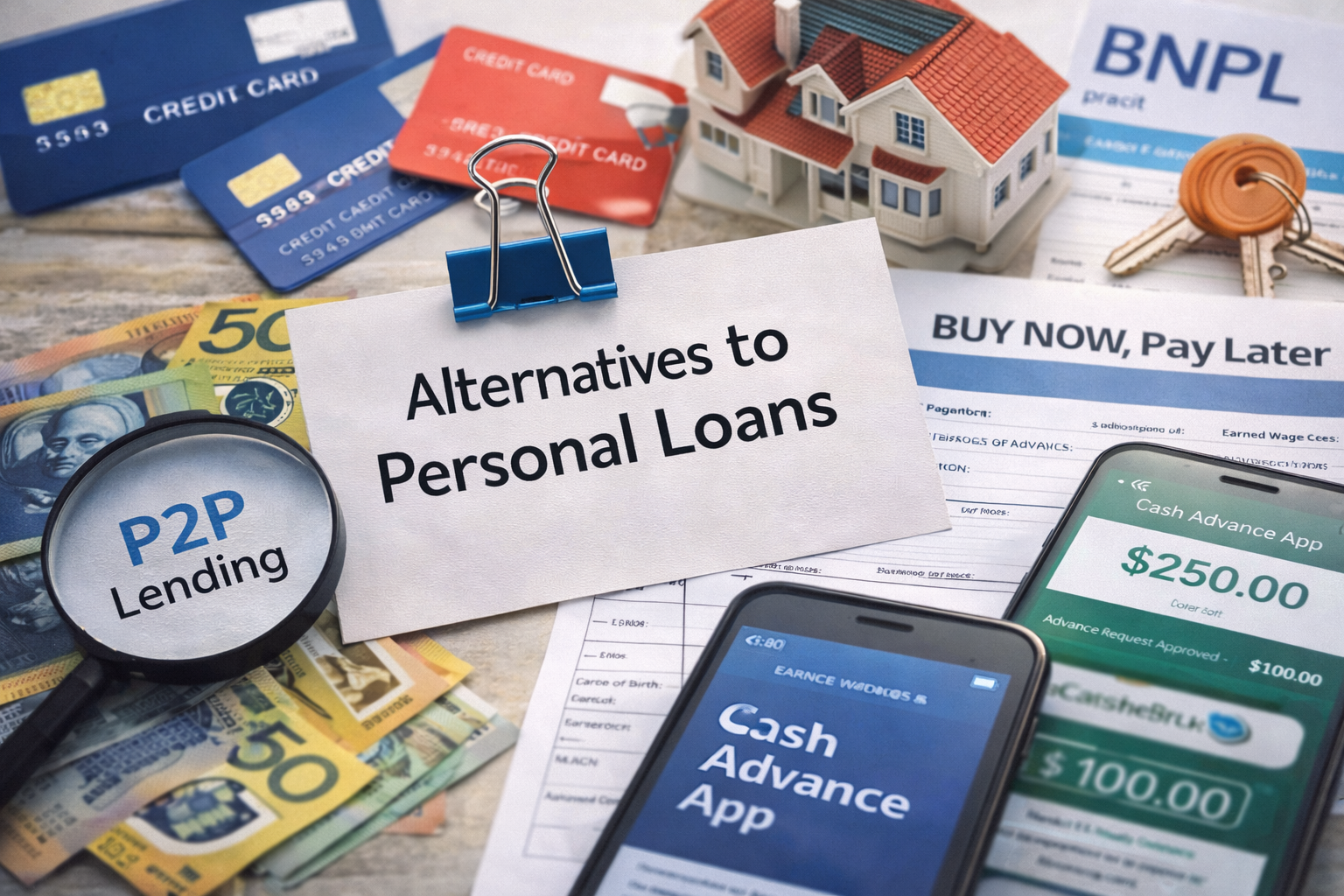
Best Alternatives to Personal Loans in Australia
Sometimes, a traditional personal loan may not suit your financial situation. You might not meet standard lending criteria, need more flexibility than a lump-sum loan provides, or want a solution tailored to a specific purpose.
Australians have access to a range of credit and financing options that may serve as alternatives to personal loans, including credit cards, lines of credit, home equity products, buy now pay later services, and other financing arrangements. Each option works differently and comes with its own costs, eligibility requirements, risks, and trade-offs.
In this guide, you’ll learn about common alternatives to personal loans in Australia, who they may suit, and what to consider before choosing one. We also explain where a structured personal loan may still be suitable for borrowers who prefer predictable repayments.
Why consider an alternative to personal loans?
People explore alternatives to personal loans for many reasons, including:
- Difficulty meeting standard lending criteria
- A need for flexible or ongoing access to funds
- Preferring to avoid a fixed lump-sum loan
- Only needing part of the total amount upfront
- Situations requiring specialised financing
- Using an existing asset to support borrowing
- Wanting different repayment structures or timing
Different credit products have different application processes, eligibility requirements, costs, and repayment structures. Lenders providing regulated credit products must comply with responsible lending obligations when assessing applications.
Understanding how each option works can help you compare products more effectively and consider which structure may best suit your needs and financial position.
Best alternatives to personal loans in Australia
Below is an overview of commonly used alternatives, how they work, and what to consider before choosing one.
1. Credit cards
Best for:
- Ongoing or unpredictable expenses
- Short-term borrowing that can be repaid quickly
- People wanting flexibility rather than a lump sum
How it works
A credit card provides access to a revolving credit limit. You can make purchases up to the limit, repay some or all of the balance, and continue using the available credit.
Interest is generally charged on the portion of the balance that remains unpaid after the due date. Different interest rates and rules may apply to certain transactions, such as cash advances.
Pros
- Flexible access to funds
- Interest-free periods on purchases for some cards (often around 45–55 days)
- Rewards or purchase protections on some cards
Cons
- Interest may apply if balances are not repaid in full by the due date
- Easy to overspend if spending is not carefully managed
- High credit utilisation may affect your credit profile
Learn more:
https://moneysmart.gov.au/credit-cards
2. Home equity loans
Best for:
- Homeowners with available equity
- Larger borrowing needs
- Borrowers seeking longer repayment terms
How it works
A home equity loan allows you to borrow a lump sum secured against your property and repay it over a set term.
Because the loan is secured by property, borrowing conditions and costs may differ from unsecured credit.
Pros
- Larger loan amounts may be available
- Interest rates may be lower than some unsecured credit products
- Longer repayment terms may be available
Cons
- Your property may be at risk if repayments are not met
- Approval processes may take longer
- Valuation and legal costs may apply
Learn more:
https://moneysmart.gov.au/home-loans
3. Home equity line of credit (HELOC)
Best for:
- Homeowners needing access to funds over time
- Renovations or ongoing expenses
How it works
A home equity line of credit is a revolving credit facility secured against your home. You can draw funds as needed and typically pay interest on the amount used.
Pros
- Flexible access to funds
- Interest charged only on the amount drawn
- May offer lower interest rates than some unsecured credit
Cons
- Interest rates may be variable
- Borrowing is secured against your home
- Ongoing access to funds may increase the risk of overborrowing
Learn more:
https://moneysmart.gov.au/home-loans/line-of-credit-home-loan
4. Buy Now, Pay Later (BNPL) services
Best for:
- Smaller purchases
- Short-term repayment arrangements
How it works
Buy Now, Pay Later services allow purchases to be split into instalments over weeks or months.
Some BNPL arrangements do not charge interest. However, fees such as late payment charges or account fees may apply depending on the provider and product terms.
Pros
- Instalment-based repayment structure
- Quick application processes with some providers
Cons
- Late payment fees may apply
- It can be easy to commit to multiple payment plans at once
- Only available with participating retailers
Learn more:
https://moneysmart.gov.au/credit-cards/buy-now-pay-later
5. Credit card balance transfers
Best for:
- Consolidating existing credit card balances
- Borrowers planning to repay debt during a promotional period
How it works
A balance transfer moves existing credit card debt to a new card that may offer a temporary promotional interest rate, sometimes including 0% interest for a set period.
Pros
- May reduce interest costs during the promotional period
- Can simplify repayments across multiple cards
Cons
- Balance transfer fees may apply
- Standard interest rates may apply after the promotional period
- Requires careful planning to repay within the promotional period
Learn more:
https://moneysmart.gov.au/credit-cards/balance-transfer-credit-cards
6. Personal line of credit
Best for:
- Ongoing or irregular expenses
- Borrowers seeking flexible borrowing arrangements
How it works
A personal line of credit is an unsecured revolving credit facility where interest is typically charged on the funds you use rather than the total approved limit.
Pros
- Flexible borrowing structure
- Interest charged only on the amount drawn
Cons
- Interest rates may be variable
- Availability may be limited in Australia
- Credit limits may be lower than secured options
Learn more:
https://moneysmart.gov.au/loans/personal-loans
7. Peer-to-peer (P2P) lending
Best for:
- Borrowers comfortable using online lending platforms
How it works
Peer-to-peer lending platforms connect borrowers with investors who fund loans through an online marketplace.
Pros
- Online application process
- Transparent loan structures on some platforms
Cons
- Fees may apply depending on the platform
- Interest rates can vary widely between borrowers
- Platforms may operate differently from traditional banks
Learn more:
https://moneysmart.gov.au/loans/personal-loans
8. Secured personal loans
Best for:
- Borrowers able to offer an asset as security
How it works
A secured personal loan uses an asset, such as a vehicle or savings account, as collateral for the loan.
Pros
- Interest rates may be lower than unsecured loans
- Larger loan amounts may be available
Cons
- The secured asset may be at risk if repayments are not met
- Borrowing flexibility may be more limited
Learn more:
https://moneysmart.gov.au/loans/personal-loans
9. Car loans
Best for:
- Financing vehicle purchases
How it works
Car loans are typically secured against the vehicle being purchased. Borrowers repay the loan over an agreed term.
Pros
- Structured specifically for vehicle purchases
- Interest rates may be lower than unsecured loans
Cons
- The vehicle may be repossessed if repayments are not met
- Vehicles depreciate over time
Learn more:
https://moneysmart.gov.au/car-loans
10. Guarantor loans
Best for:
- Borrowers with limited credit history
How it works
A guarantor loan involves another person agreeing to guarantee the loan. The guarantor may become responsible for repayments if the borrower cannot meet their obligations.
Pros
- May help some borrowers meet lender requirements
- Borrowing terms may differ compared to unsecured loans
Cons
- Financial risk for the guarantor
- May affect personal relationships if repayment difficulties occur
Learn more:
https://moneysmart.gov.au/loans/personal-loans
11. Cash advance and earned wage access apps
Best for:
- Small, short-term cash needs
How it works
Earned wage access services allow workers to access wages they have already earned before their scheduled payday.
Costs, fees, and eligibility criteria vary depending on the provider.
Pros
- Faster access to funds compared with traditional credit products
- May help cover short-term cash flow gaps
Cons
- Reduces future pay available on payday
- Access limits may apply
- Fee structures vary between providers
Learn more:
https://moneysmart.gov.au/payday-loans
12. Early access to superannuation
Best for:
- Severe financial hardship
- Compassionate grounds
How it works
Early access to superannuation is only permitted in limited circumstances and usually requires approval through the Australian Taxation Office or your super fund.
Pros
- No interest or loan repayments
Cons
- Reduces retirement savings
- Strict eligibility requirements apply
- Generally considered a last-resort option
Learn more:
https://www.ato.gov.au/individuals/super/withdrawing-and-using-your-super/early-access-to-super/
Frequently Asked Questions
What is the best alternative to a personal loan?
The most suitable option depends on your needs, financial position, and repayment preferences. Different products are designed for different situations, so comparing costs, risks, and repayment structures is important.
Can I access alternatives with bad credit?
Eligibility requirements vary between providers. Some credit products consider factors beyond a credit score, such as income, security, or a guarantor.
Are alternative lenders safe?
Consumers may wish to check whether a provider holds an Australian Credit Licence and complies with relevant consumer credit laws.
You can search the official register here:
https://connectonline.asic.gov.au
How quickly can funds be accessed?
Timing varies by product and provider. Access to funds may range from near-instant for some services to several weeks for products requiring detailed assessments.
Will alternatives affect my credit score?
Some credit products involve credit checks and reporting to credit bureaus, while others may not. Missing repayments on regulated credit products can affect your credit history.
Learn more:
https://moneysmart.gov.au/managing-debt/credit-scores-and-credit-reports
Why choose Credit24
After comparing different options, some borrowers may prefer the structure and predictability of a personal loan.
Credit24 offers:
- Fully online application
- Loan amounts from $500 to $10,000
- Clear repayment schedules
- Fixed loan terms
- No collateral required
- Transparent pricing
Learn more about Credit24 personal loans:
https://www.credit24.com.au/personal-loans
In some cases, funds may be transferred to eligible accounts using the Osko payment system, subject to bank processing times and eligibility.
This information is general only and does not consider your personal financial situation. Credit is subject to eligibility criteria, fees, and terms and conditions.
Disclaimer
IPF Digital Australia Pty Ltd, trading as Credit24, ABN 59 130 894 405. Australian Credit Licence 422839.
The information in this article is general in nature and does not consider your objectives, financial situation, or needs. Lending criteria, fees, and charges apply. For product details, eligibility requirements, and full terms and conditions, visit: https://www.credit24.com.au/terms-and-conditions
Disclaimer
IPF Digital Australia Pty Ltd, trading as Credit24, ABN 59 130 894 405. Australian Credit Licence 422839.
The information in this article is general in nature and does not consider your objectives, financial situation, or needs. Lending criteria, fees, and charges apply. For product details, eligibility requirements, and full terms and conditions, visit www.credit24.com.au.
Start a loan application