06/07/2026
Cost of Living in Australia: What You Should Know
Understand the cost of living in Australia, what's driving higher prices, key expenses, support options, and ways to manage your budget

New research from Credit24, conducted by Primara Research, reveals more than one in three Australians (37%) have permanently changed how they live because of fuel costs, with the crisis pushing into a fifth month of sustained cost pressure. It's a sign of how quickly economic pressure can reshape daily habits once it holds for long enough.
Five months on, the pressure hasn't lifted. As of last week, petrol remained 5% above pre-crisis levels and diesel 8% higher, and that gap is about to widen. Primara Research modelling shows prices could rise to 15 to 18% above pre-crisis levels once the final 16 cent excise cut is removed this month.
For more than a third of Australians, the response has already outlasted the trigger. The changes people made to cope with fuel costs haven't reversed, they've become a permanent shift in how people live.
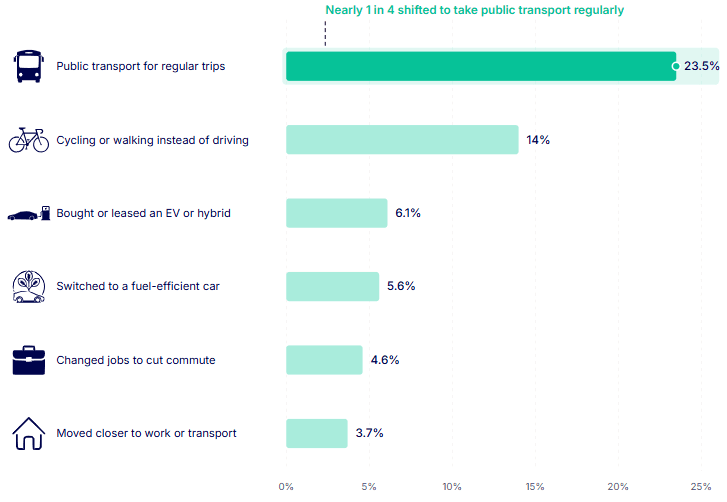
23.5% switched to public transport for regular trips
14% started cycling or walking for trips they used to drive
6.1% bought or leased an electric or hybrid vehicle
Some have gone further still, changing jobs or even moving house to reduce their exposure to fuel costs long term.
Millennials were the most likely generation to lock in a permanent change (47.8%), ahead of Gen Z (40.3%) and Gen X (37.2%). Boomers were the least likely (21.7%), a gap that likely reflects where cost pressure is heaviest, Millennials juggling mortgages, childcare and family budgets, against Boomers with fewer overlapping financial commitments.
"Fuel is the trigger here, but the pattern is bigger than fuel," said Peter Drennan, Head of Research and Data at Primara Research. "Once a cost stops feeling temporary, Australians adjust and stay adjusted. That's the real signal in this data."
"What this really shows is how little room some households have left," Drennan added. "When a cost holds for long enough, budgeting isn't optional anymore, people are forced to find the money somewhere else in their lives. The generational gap here is really a gap in how much financial buffer people have to begin with."
Permanent behavior changes reported five months on from the fuel crisis